Manufacturing Content Management: Why Marketing Teams Can't Keep Up (And What to Fix)
Why manufacturing marketing teams are drowning in file chaos and the cascading frustration that builds from the job site all the way to leadership.


Picture this: A distributor rep is on the phone with a contractor who just pulled a product off the wall at a job site. The contractor needs the installation specs -- fast. The rep searches the manufacturer website. Fourteen results come back, none clearly right. He tries a different keyword. Nothing useful. He emails the manufacturer's marketing team. He gets a response four hours later -- after the job has stalled.
This is not an edge case. For mid-market manufacturers with distributor networks, this is Tuesday.
The problem is not that the information does not exist. It usually does -- spread across a SharePoint folder, a website resources page, and an old distributor portal nobody remembers the login for. The problem is that none of it is organized for the people who actually need it, in the moments they actually need it.
The result is a cascade of frustration that travels upstream: from the contractor to the distributor, from the distributor to the internal team, from sales to marketing, and from marketing to leadership -- where it typically gets summarized as: the website is broken.
The Hidden Cost of Unmanaged Manufacturing Content
Ask any marketing manager at a mid-market manufacturer what eats their week and the answer is the same: requests. Where is the current spec sheet for the X-series? Can you send the installation guide? Do we have anything in Spanish for the Texas distributor?
These requests are not hard to fulfill individually. But multiply them across a sales team, a distributor network, and a service organization -- and a lean marketing team (often two or three people) spends a meaningful chunk of every week tracking things down, confirming versions, and emailing files.

It is not just the marketing team's time. Every salesperson and distributor rep in the network loses hours per week hunting for information. They repeat the search they did six months ago because there is no reliable way to find what they found before. Multiply that across every person in the chain and the wasted time is substantial -- and entirely invisible on any dashboard.
This is the part that surprises leadership when they finally see it clearly: the problem is not a website problem, and it is not a marketing problem. It is a system problem. The files exist. The information exists. What does not exist is a reliable, structured way for the right people to access the right version of the right document at the right moment.
Why SharePoint and Dropbox Fail Manufacturing Teams
Most mid-market manufacturers have tried to solve this. They have just solved it with tools that were not built for their situation.
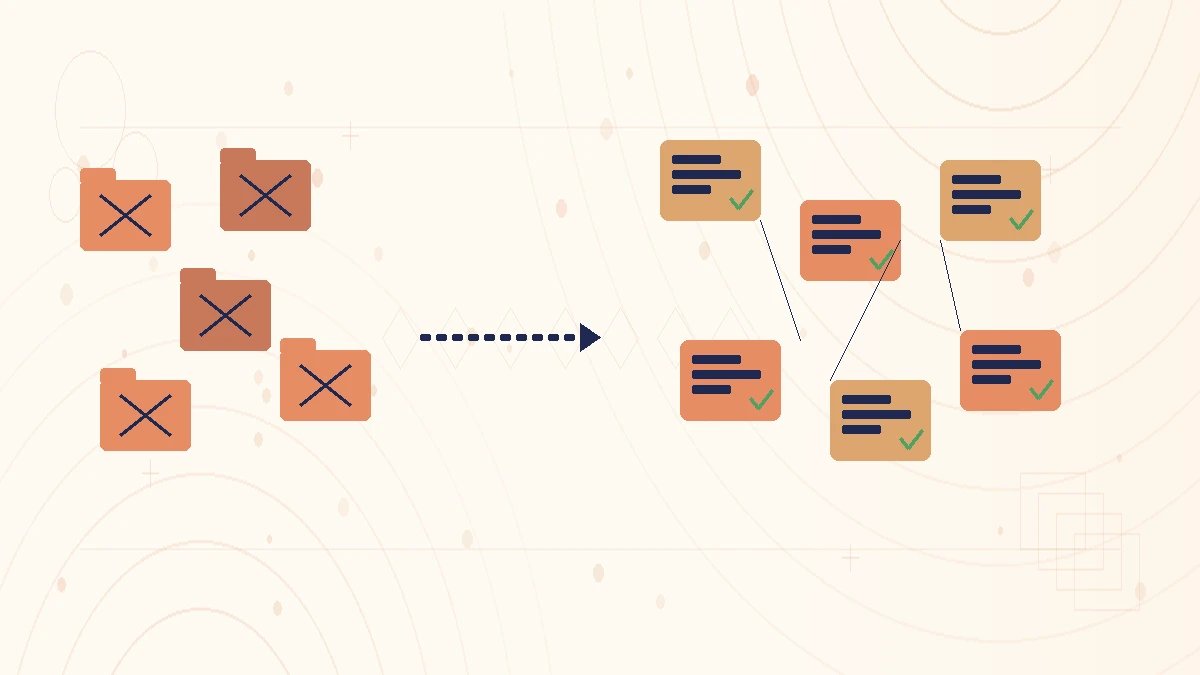
SharePoint is where a lot of this content lives. And SharePoint works fine for internal document management within a single organization. But manufacturers do not just serve internal teams -- they serve distributors, mfg reps, contractors, and service technicians across a complex, multi-party network. SharePoint is not built for that. Access control is clunky. Navigation for external users is painful. It is not structured to surface a specific installation guide for a specific product model to someone on a job site using a mobile device.
The company website becomes a de facto content hub by default. Manufacturers post product documentation and spec sheets publicly -- and then watch as distributors try to navigate a site built for customers, not technical search. The experience of finding a specific document feels, to the people trying to find it, like a maze.
Distributor portals sound like the right solution. But most were built years ago, are rarely updated, and suffer from all the same structural problems: hard to navigate, slow to search, not mobile-friendly, and not organized around how people actually look for information in the field.
The net effect of patching all of this together is that nobody trusts any single source. Distributors default to emailing someone at the manufacturer directly -- because it is faster than fighting the portal. Which is exactly the behavior that bogs down the internal team.
Product Documentation Versioning: The Quiet Risk in Manufacturing
Here is the part of this problem that does not get enough attention: products change. Models get updated. Specs get revised. Installation procedures change based on new regulatory requirements or field experience. In a product line with any complexity, the documentation for a product sold three years ago looks different from the documentation for the same product sold today.
When the wrong version of a document is used -- when a contractor follows an installation guide that has been superseded, or a service tech uses a spec sheet for a previous model -- the consequences are not just inconvenient. They can result in improper installs, warranty claims, and callbacks that cost real money.
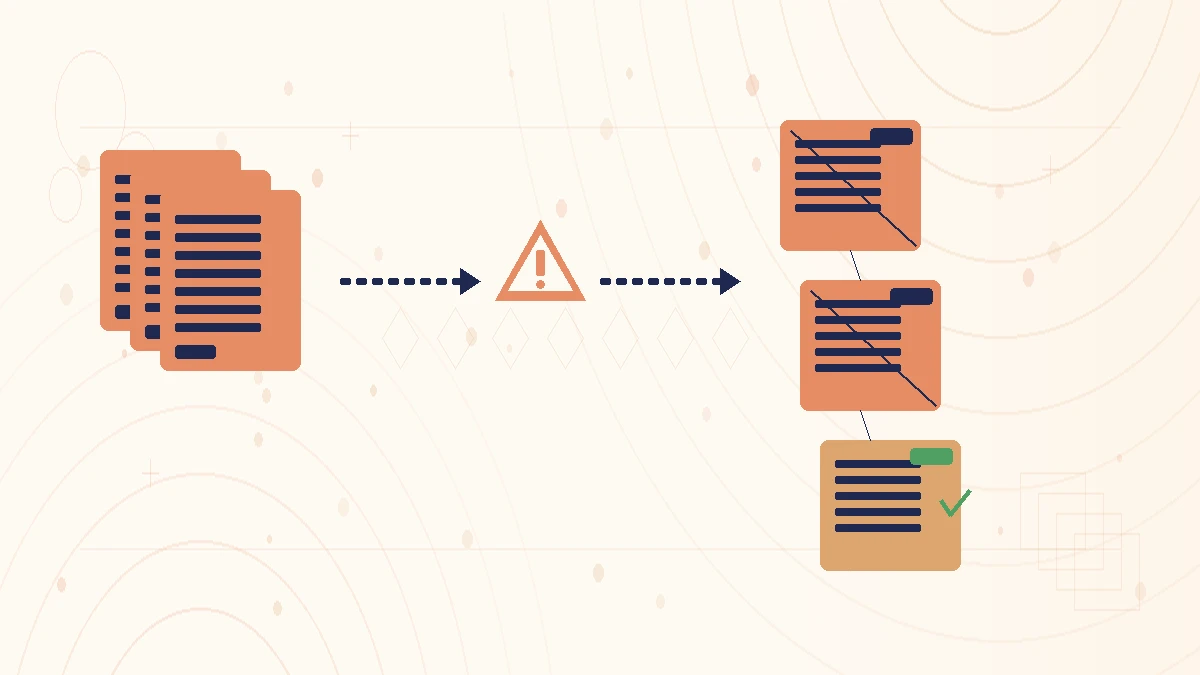

Version control failures in manufacturing content are rarely dramatic -- they are quiet. A slightly wrong spec gets used. An install happens based on outdated instructions. Nobody flags it until something fails, a warranty claim comes in, or a service tech has to go back to site. By then, the connection to a content management problem is rarely made.
This is why putting everything on Dropbox does not work. Dropbox is great at storing files. It is not built to enforce that only the current version of a document is findable and shareable -- especially across a network of external partners who may have saved old versions locally, shared them by email, or bookmarked links that no longer point to the latest file.
Who Feels the Pain -- and When
It is worth tracing the chain here, because the frustration looks different depending on where you sit.
The contractor is often in the highest-stakes situation. They are on a job site -- or dealing with a repair call -- and they need an answer fast. When they cannot get it quickly, their day stalls. That frustration goes directly to whoever they called for help.
The distributor rep is in the middle. They are trying to support their customer, but they are dependent on the manufacturer for accurate, accessible information. When that system does not work, they are the ones who look slow, unprepared, or unreliable -- even though the problem is not theirs. They call the manufacturer. They wait.
The manufacturer's internal team -- sales, service, and marketing -- absorbs all of it. The sales team fields calls they should not have to make. Service deals with issues that stem from wrong information. And marketing, typically a lean team, catches complaints from all sides: the website is bad, the portal is broken, nothing is findable, where is the current version.
The thing that makes this particularly corrosive is that it erodes trust over time. Distributors stop relying on the manufacturer's systems because those systems have let them down too many times. They build their own workarounds. They keep local copies. And the manufacturer loses visibility into how their content is actually being used -- or misused -- in the field.
Why Generic Tools Do Not Solve Manufacturing Content Management
Here is what makes this problem genuinely difficult: manufacturing supply chains involve multiple types of parties doing fundamentally different things with the same information.
A distributor pre-sales rep needs marketing collateral and product comparison materials. A service technician needs installation guides and troubleshooting docs. A contractor on a job site needs a specific spec for a specific model version, fast, on a phone. An internal sales rep needs a battle card and a case study. A channel manager needs pricing-protected documents that cannot be seen by the wrong party.
These are not just different people. They are different use cases, different access levels, different search behaviors, and different urgency levels. A single system built for one of them does not work for the others.
Leadership often does not realize how big this problem is -- because it never surfaces cleanly. It shows up as 'the website is bad' or 'marketing is not responsive' or 'our distributors are not selling us as hard as they could.' The root cause -- no reliable, structured content infrastructure for a multi-party channel -- rarely gets named as such.
What a Real Manufacturing Content Management System Changes
The clearest way to understand the value of getting this right is to look at what each person's day looks like when the problem is solved.

The marketing team stops being reactive. Instead of fielding requests and scrambling for current files, they run a platform that lets people find things themselves -- with confidence that what they find is accurate. They focus on creating better content instead of distributing it manually.
The sales team has more confidence -- both in the tools and in how they appear to the people they are selling to. They pull the right spec sheet in a conversation, share the right case study after a meeting, and respond to a distributor request without calling marketing first. They look like experts because they have easy access to the information that makes them look like experts.
The distributor answers the contractor's question before they hang up. They are not waiting for a callback. They are not navigating a broken portal. They get the right document, in the right version, immediately -- and that makes the entire channel more effective.
And the contractor? They just get it done. Faster. With less stress. And less chance of having to come back because something was installed wrong.
How to Start Building a Single Source of Truth for Your Channel
Most manufacturers do not fix this problem because they do not see it as one fixable problem. They see it as several frustrations in different places -- a website issue here, a marketing bandwidth issue there, a distributor complaint somewhere else. It takes stepping back to see that they are all the same root cause.
A single source of truth -- one place where all marketing and product documentation lives, is version-controlled, is structured for different types of users, and gives analytics on how it is being used -- is not a luxury for manufacturers with complex channel networks. It is infrastructure. See how a branded portal solves exactly this for distributor and channel access.
The manufacturers who build it stop reacting to chaos. The ones who do not keep inheriting it.
FAQs
Why can't distributors just use our website to find product documentation?
Company websites are built for customers browsing products, not for technical search. Distributors and contractors need to find a specific spec sheet or installation guide for a specific model fast, which a general-purpose website navigation isn't structured to do.
Why doesn't SharePoint work for manufacturer content management?
SharePoint is built for internal document management within one organization. Manufacturers need to serve distributors, reps, contractors, and service technicians across a multi-party network, with access control and mobile-friendly search SharePoint wasn't designed for.
What happens when a contractor uses an outdated version of an installation guide?
Using a superseded document can lead to improper installs, warranty claims, and costly callbacks. Version control that ensures only the current, approved document is findable and shareable is critical for manufacturers with any product complexity.
How is a manufacturing content system different from a generic file-sharing tool?
Manufacturing supply chains involve different parties doing fundamentally different things with the same information: pre-sales reps need marketing collateral, technicians need installation guides, contractors need a spec for a specific model, and channel managers need pricing-protected documents. A single generic tool built for one use case doesn't serve the others.
What does a single source of truth actually solve for a distributor network?
It gives every party, internal team, distributor, contractor, or service tech, self-serve access to the current, correct version of the file they need, without waiting on a callback from marketing.
.png)
Ready to see Sparkfive in action?
Book a 20-minute personalized demo for your team.